Arab Music in Tunisian Schools: The Story Behind Tunisia88's Arab Choir and Orchestra Program
Five Arab Choirs and Orchestras perform across Tunisia each year. Here is what they play, how students join and what makes this program distinct.
Tunisia's musical heritage is layered. Malouf traditions, Andalusian roots, contemporary Arabic pop, regional folk forms and rhythms that predate all of them. Tunisia88's Arab Choir and Orchestra program exists to put that heritage into schools alongside the polyphonic Western choral tradition, giving Tunisian students access to both.
Five Arab Choirs and Orchestras
Tunisia88 runs five Arab Choirs and Orchestras, each serving a different region. Like the six Polyphonic Choirs, these ensembles draw their members from Tunisia88 clubs through a competitive audition process. The Arab Choir program is not a secondary track: it has equal standing in the program's structure and equal resources in the annual budget.
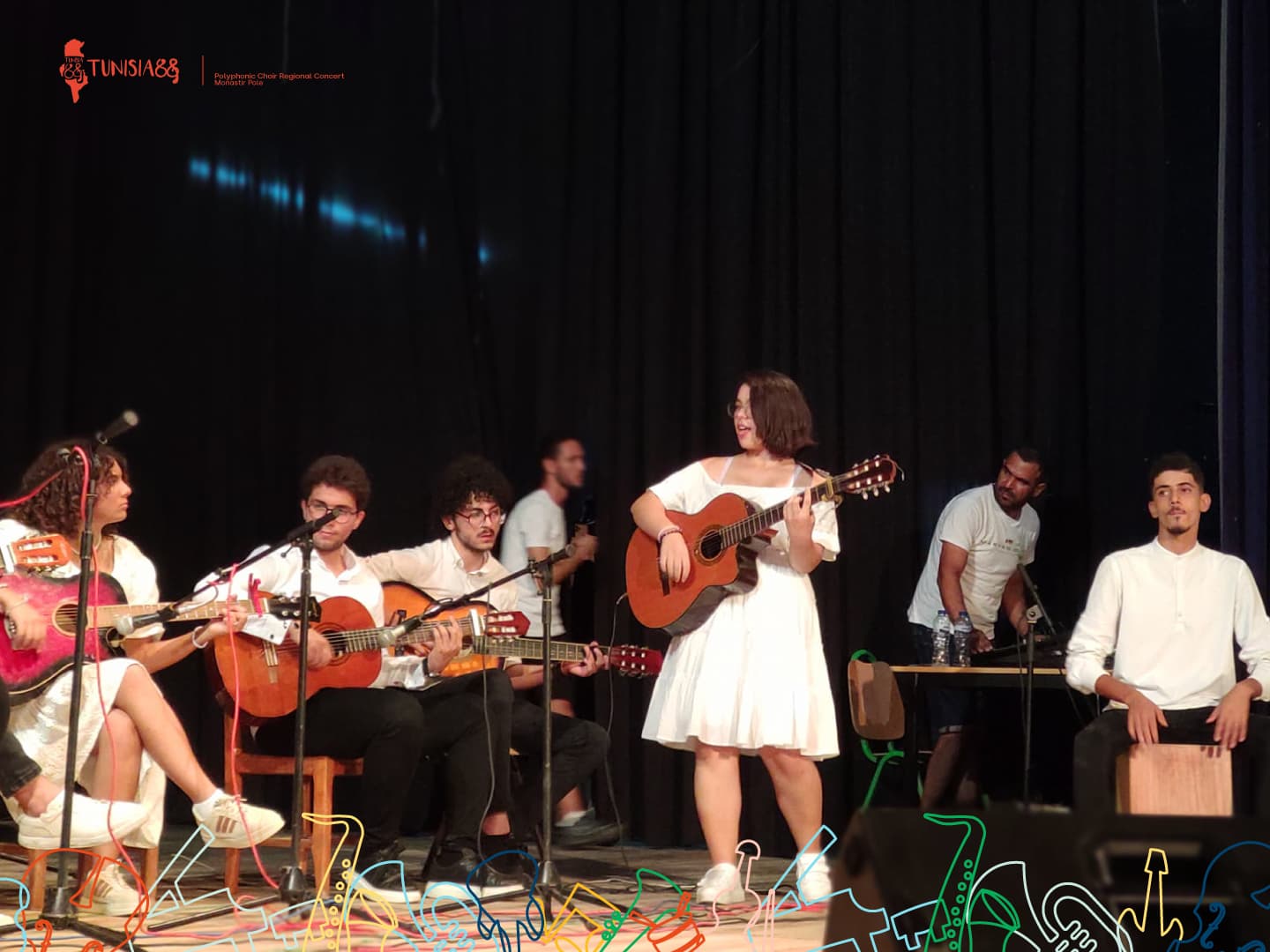
Each Arab Choir and Orchestra combines choral voices with traditional instruments, including the oud, the qanun, the riq and the derbuka. Some ensembles also incorporate contemporary Arabic instrumentation. The repertoire is a mix of classical Arabic choral forms, original compositions and arranged folk material from the ensemble's region.
What students learn
Membership in an Arab Choir and Orchestra is a serious musical commitment. Students work with the ensemble's musical director to develop their knowledge of maqam, the modal system that underlies Arabic music, their ensemble listening skills and their ability to perform demanding choral repertoire.
For many members, the Arab Choir is their first structured exposure to Arabic music theory. The clubs they come from may have focused on contemporary music, pop arrangements or Western song forms. The choir program deepens their musicianship in a specifically Arabic direction.
The audition process
Students audition through the same three annual windows as the Polyphonic Choirs: August, October and February. Auditions assess voice quality, pitch accuracy within the maqam system and rhythmic precision. No prior formal training in Arabic music is required, though returning members who have developed their skills have an advantage.
Regional identity in the repertoire
One of the distinguishing features of the Arab Choir program is its attention to regional musical identity. Each ensemble performs music that reflects the specific traditions of its region, not a generalized 'Arabic music' that flattens Tunisia's internal diversity. A choir from the south draws on different material than one from the northwest.
This is a pedagogical choice as much as a musical one. Students who perform music rooted in their own region's traditions develop a different relationship to that heritage than students who only encounter it as passive listeners. Performance is a form of preservation.
Public performances
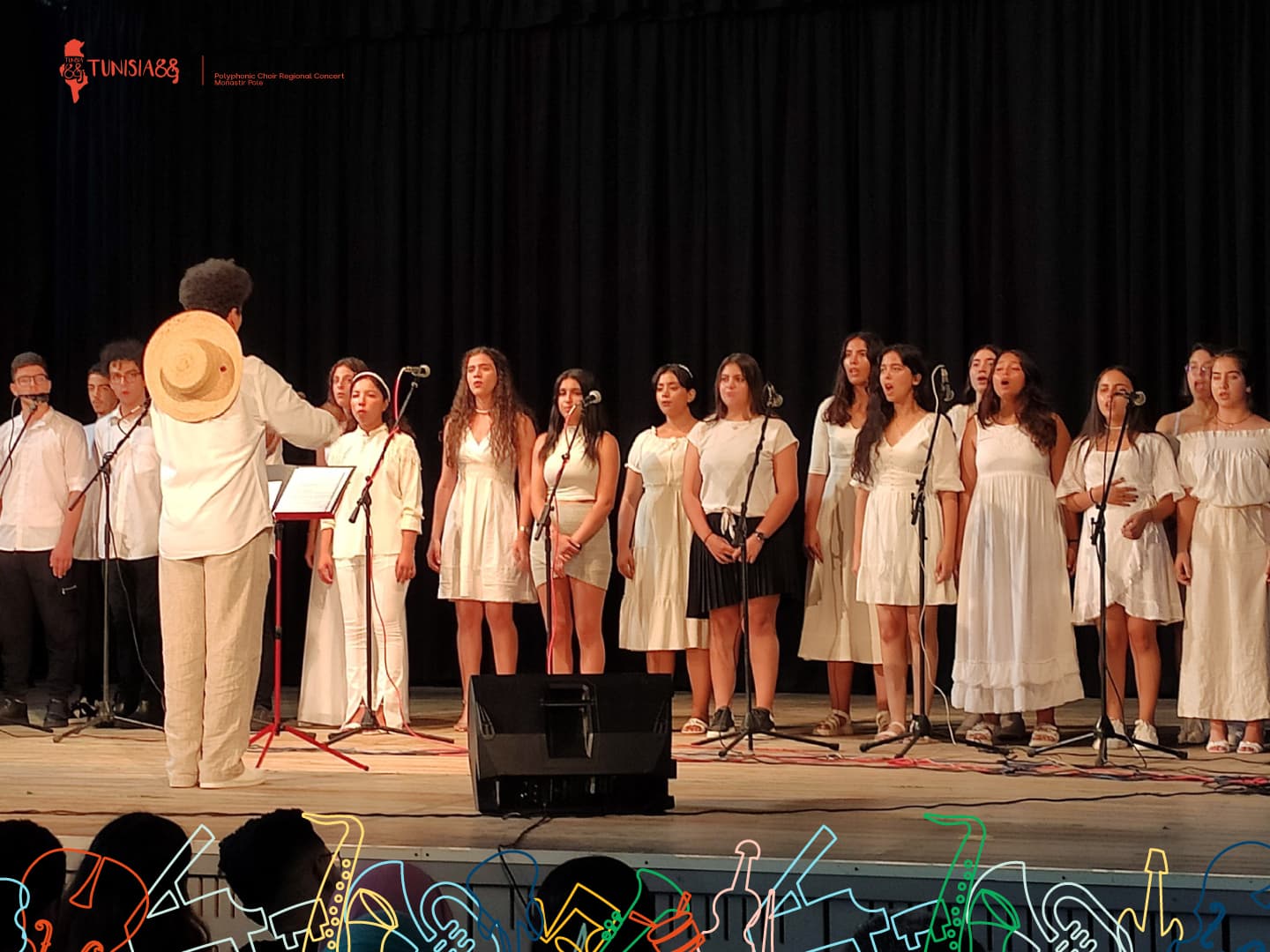
Arab Choirs and Orchestras perform publicly during the concert season, which runs from January through May. Performances are held at cultural venues, schools, community centers and festival stages across each ensemble's region. The program has also hosted inter-regional concerts bringing Polyphonic Choirs and Arab Choirs together on the same stage, a pairing that reflects Tunisia88's commitment to both traditions.