How Tunisia88 Brought Music to Every Public High School in Tunisia
In 2014, 88 concerts in 88 cities planted the seeds. By 2024, 596 student-led clubs cover every public high school in Tunisia. Here is the full story.
In the summer of 2014, 88 concerts were staged in 88 Tunisian cities over a single season. That was the beginning. A decade later, 596 student-led music clubs operate in every public high school in the country, in every one of Tunisia's 24 governorates. This is the story of how that happened.
A program born from a belief
Tunisia88 was founded on two convictions: that music cultivates respect for differences, and that music can be a window on the world. The program was built jointly by Action et Développement Solidaire, a Tunisian NGO, and 88International, an international organization dedicated to developing music programs with lasting community impact.
From the start, the goal was not to run one-off concerts or workshops. The goal was structural: a music club in every public high school in Tunisia, led by students, sustained by alumni, and supported by the school itself.
Phase I: 88 concerts, 76 clubs
The opening season produced 88 concerts across the country. Those concerts were not just performances. They were prospecting. Every high school that hosted a concert became a candidate for a Tunisia88 club. By the end of Phase I, 76 clubs had been founded, covering the first wave of public high schools and reaching every governorate at least once.
The EIB Institute, part of the European Investment Bank Group, joined as a founding supporter during Phase I. The Institut für Auslandsbeziehungen (IFA) brought cooperation expertise for the program's international dimension. That combination of Tunisian civil society, international funding and institutional support set the structure for everything that followed.
Phase II: a club in every remaining high school
Phase II had one target: reach the remaining 511 public high schools. Club by club, governorate by governorate, the network expanded until every public high school in Tunisia had a Tunisia88 club. The Ministry of National Education of Tunisia became an institutional partner, opening doors to schools and giving the program standing inside the national education system.
This phase also built the alumni structure. As the first wave of club leaders graduated, they did not leave. They came back as coordinators, trainers and supervisors, creating the backbone of what would become the alumni squad network.
Phase III: making it last
A national footprint is not the same as a lasting program. Phase III focused on sustainability: the 596 clubs needed to run without continuous external intervention. That meant building systems. Three annual trainings. Twelve alumni squads. Two national contests. Eleven regional choirs. A reporting cycle in Arabic, French and English. The infrastructure to keep the music going.
Today, Phase III is funded mainly by Tunisian sponsors. The move from European institutional funding to local sponsorship is itself part of the story: Tunisia88 is becoming a Tunisian-owned, Tunisian-run program in the fullest sense.
What 596 clubs looks like on the ground
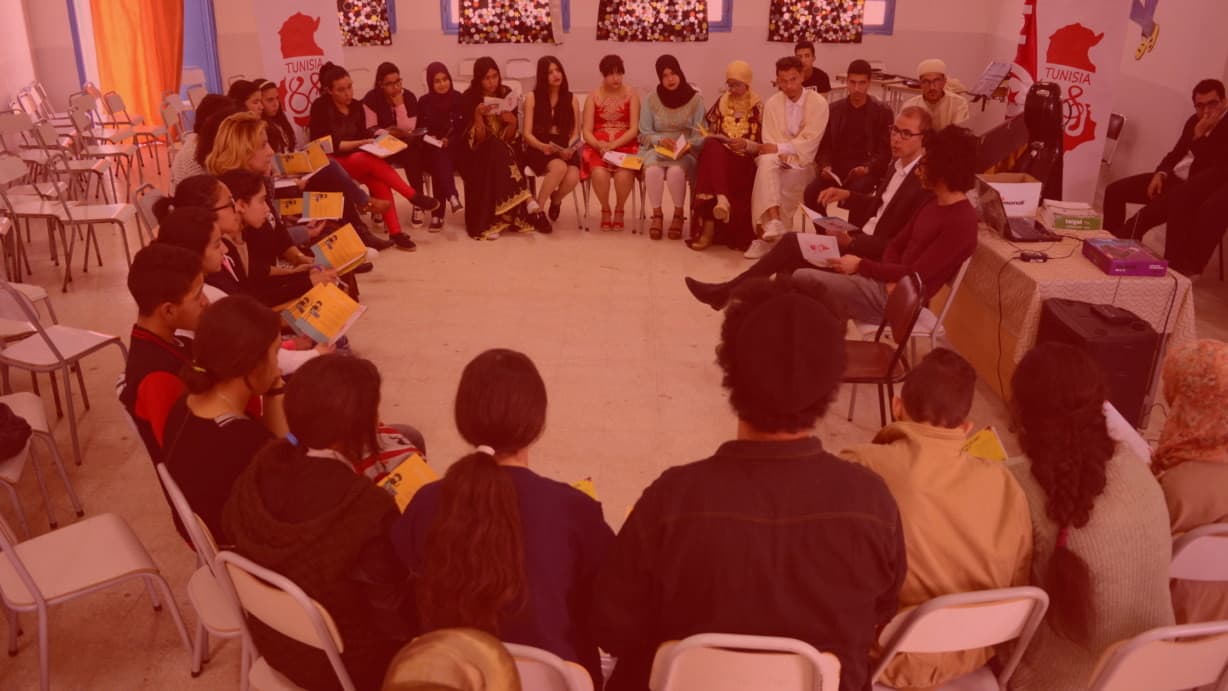
In every public high school in Tunisia, there is a student who was elected by peers to lead the school's music club. That student attended Leadership Training 1 at the start of the year, Creativity Training in November and Leadership Training 2 in December. They are supported by an alumni supervisor in their region, by a teacher at the school and by the national alumni structure.
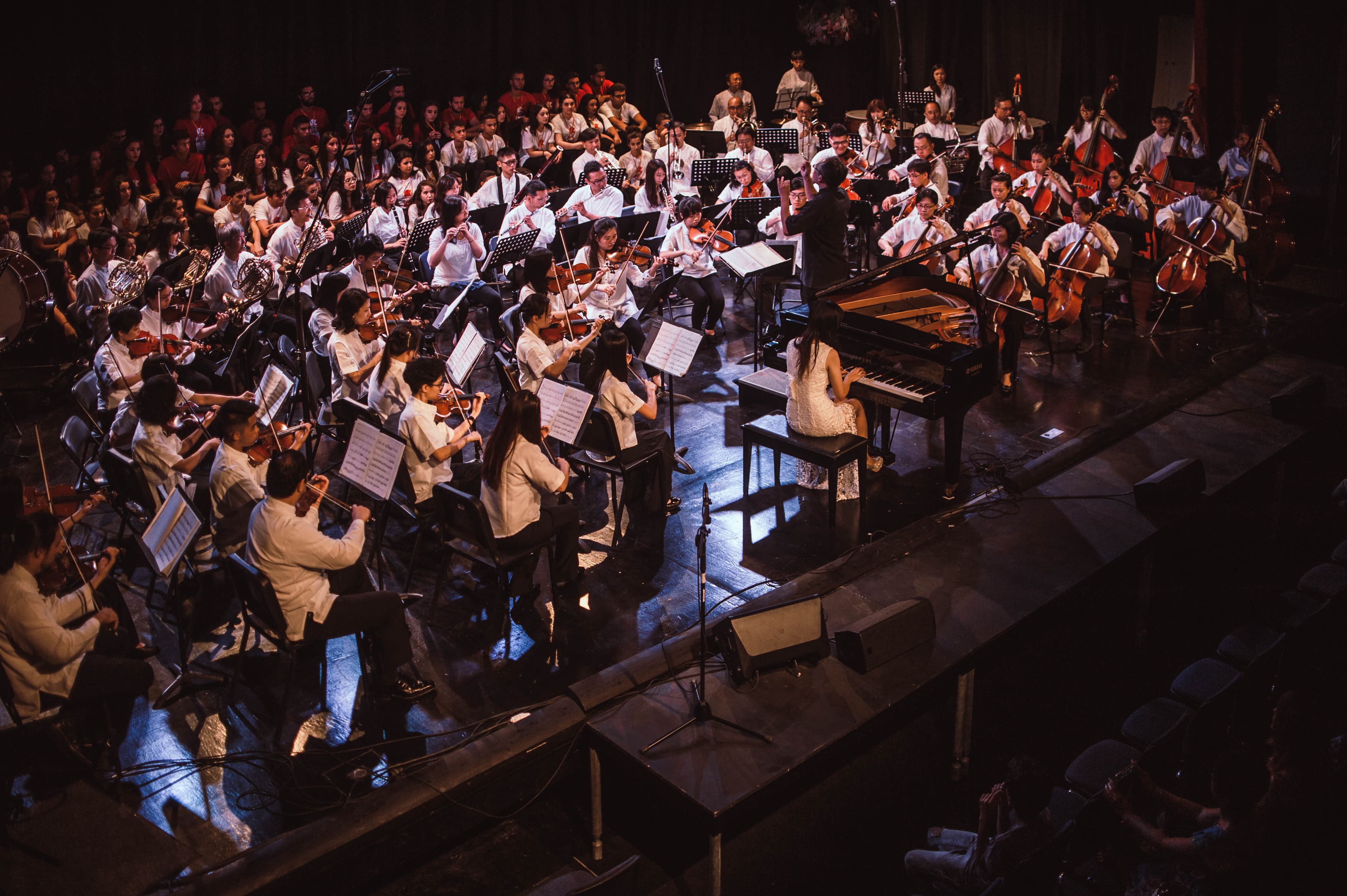
The clubs rehearse weekly. They enter the national Song Contest and Event Contest. The strongest musicians audition for regional choirs. The cycle repeats every year, with new leaders elected, new trainings delivered, new concerts staged. That is what 596 clubs looks like.
The program grew in three deliberate phases, each one wider than the last. The numbers tell the story: 76 clubs, then 511 schools, now 596 clubs sustained.
Tunisia88 Phase Reports