How Tunisia88 Trains Student Leaders Without Music Degrees
Three trainings a year, all delivered by alumni. No music degrees required. Here is the Tunisia88 leadership training model and why it works.
Every elected Tunisia88 club leader receives three trainings during their year in office. None of them require a music degree. All of them are delivered by Tunisia88 alumni, people who held the same club leader position in a previous year and chose to come back to train the next generation.
This is the core of the Tunisia88 training model: not instructors hired from outside, not NGO program staff, but alumni who earned the right to train by completing a Training of Trainers themselves.
The three trainings
Leadership Training 1: September
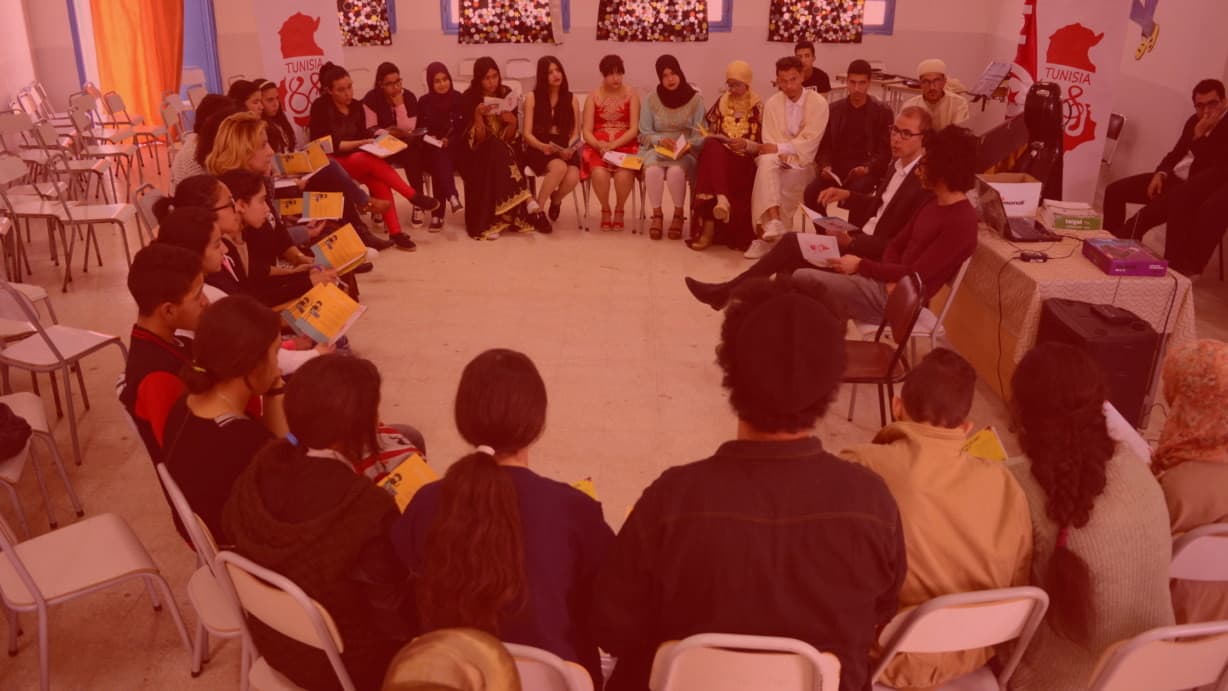
The first training runs in September, right after elections. The newly chosen club leaders arrive having just been voted in by their peers. LT1 onboards them into the Tunisia88 community and gives them the tools to lead their club well: how to run inclusive meetings, how to plan activities, how to listen actively, how to take responsibility for a group.
Creativity Training: November
November's Creativity Training shifts from leadership to creative practice. Leaders learn to lead a creative process: how to bring a song idea from a vague impulse to a finished structure, how to manage a team through creative friction, how to build an environment where members take risks without fear of getting it wrong. The Song Contest season opens around this time, so the training has immediate application.
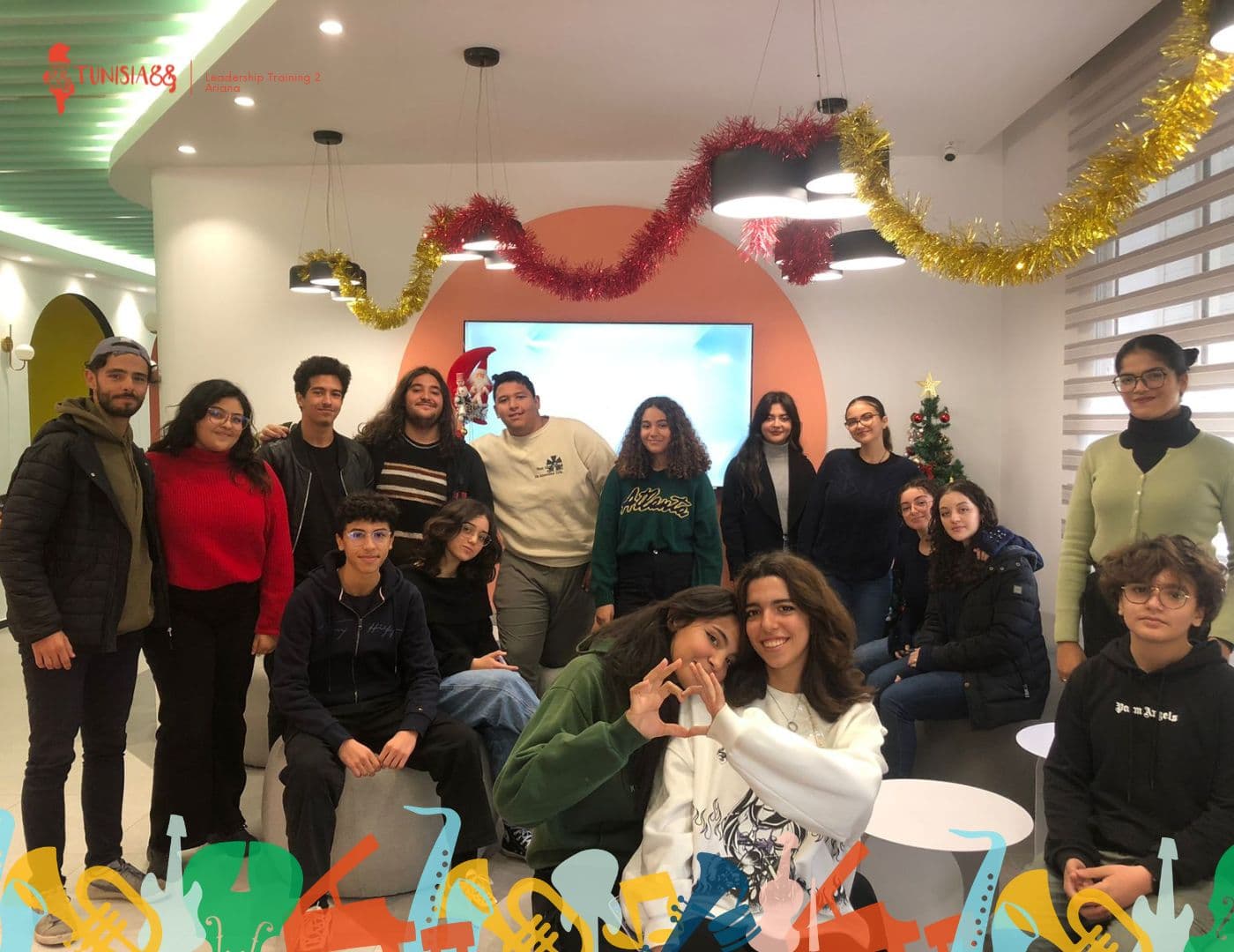
Leadership Training 2: December
LT2 goes deeper into the harder aspects of leadership: sustaining a club when energy drops, organizing a real community event, navigating the moment when a group is about to disband or hand off to new leadership. It is explicitly designed for the second half of the year, when clubs are no longer in the novelty phase and the real test of leadership begins.
The Training of Trainers
The people who run LT1, CT and LT2 are Tunisia88 alumni who completed a Training of Trainers. The ToT is a separate, more intensive process that teaches alumni how to design and deliver the curriculum, not just follow a script. A trained trainer can adapt, improvise, read a room and adjust.
The ToT model is what makes the program scalable. As the club network grew from 76 clubs to 596, Tunisia88 did not need to hire proportionally more external facilitators. It needed to produce more alumni trainers. The system trains itself.
What the pedagogy looks like
- Experiential learning: activities come before theory. Leaders do something first, then reflect on what it taught them.
- The Socratic method: trainers ask rather than tell. Every session is built around questions, not lectures.
- Trainer and trainees together: the trainer guides; the leaders own the room. Every session is led, not delivered.
In practice, this means a Leadership Training 1 session does not look like a classroom. It looks more like a structured game followed by a guided conversation. The learning is embedded in the experience, not transferred through slides.